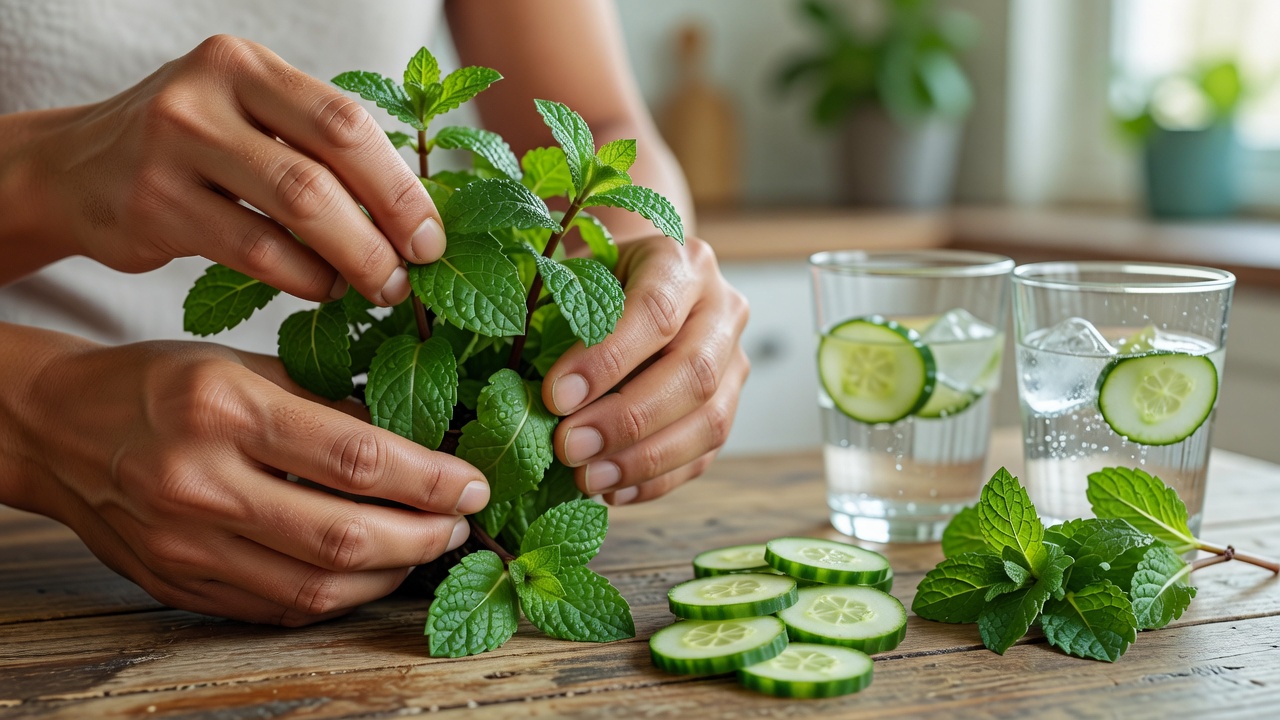
Herbs make a sparkling drink feel freshly assembled even when its other ingredients are simple. Mint brings a cool impression, basil gives a rounded green aroma, and rosemary adds a resinous note that suits citrus. None needs to dominate. Think of an herb as the supporting voice behind fruit or cucumber, not an entire garden squeezed into a glass.
Start with familiar culinary herbs from a reliable food source. Wash them under running water, remove damaged leaves and use clean utensils. Do not identify wild plants by resemblance, and do not use ornamental flowers or leaves unless they are positively identified as edible and grown for food use. Essential oils are not a substitute for culinary leaves in these recipes.
Choose the extraction, not just the herb
A gentle press releases aroma quickly. A short cold infusion gives a softer result. Hot water can draw out flavour faster, but it also changes the character of delicate leaves and may produce a more cooked or tea-like taste. Whichever route you choose, extract the herb into a still base, strain it and chill it before adding sparkling water.
For a quick mint drink, press a few leaves once or twice against the side of a sturdy mixing glass using the back of a spoon. The goal is to bruise them lightly, not grind them into a green paste. Torn fragments can become bitter or get stuck in a drinking straw. Straining makes the texture cleaner and the strength easier to judge.
Cucumber & mint garden cooler
This recipe is deliberately light. Cucumber provides a fresh, almost savoury backbone, while lemon keeps the drink from tasting like plain infused water. Peel the cucumber if its skin is particularly tough or bitter.
- 100 g cucumber, thinly sliced
- 8 small fresh mint leaves
- 60 ml cold still drinking water
- 20 ml fresh lemon juice
- 10–20 ml simple syrup, optional
- 300 ml chilled plain sparkling water
- Ice and a few cucumber ribbons
- Put the cucumber and mint in a clean bowl or jug. Press lightly with a spoon and add the still water.
- Cover and refrigerate for about 20 minutes. Taste, then strain, pressing the cucumber gently to release some juice.
- Stir in the lemon and 10 ml syrup if using. Divide the base between two ice-filled glasses.
- Add 150 ml sparkling water to each glass. Stir gently and adjust the sweetness if needed. Garnish lightly and serve.
The size and intensity of mint leaves vary, so the leaf count is only a starting point. If the base tastes weak, infuse a little longer before adding more leaves. If it tastes too minty, dilute the still base and taste again. It is easier to correct the mixture before bubbles enter the picture.
Basil, rosemary and ginger
Basil works especially well with strawberry or peach. Use a few clean leaves and press them gently into the still fruit base just before straining. Long storage can dull the fresh aroma and darken the leaves. Keep an attractive small leaf for garnish rather than leaving a handful of crushed basil in the finished drink.
Rosemary is more assertive. Try a small sprig in a cooled citrus syrup or still-water infusion, taste after a few minutes and remove it when the aroma is distinct but not woody. Do not leave a large branch soaking indefinitely. Different plants vary in strength, and a strong infusion is not always a better one.
Fresh ginger is a root rather than a leafy herb, but it belongs in the same flavour toolkit. Thin slices infused in hot water give a more controlled result than a large spoonful of raw grated ginger. Strain carefully, cool promptly and chill before mixing. Ginger can feel quite hot; start with a small amount of the infusion and increase gradually.
Keep colour, aroma and safety in balance
Prepare small amounts of herb base and keep them covered in the refrigerator. We favour making these infusions on the day of serving rather than promising a long storage life. Fresh plant material, handling and refrigerator temperatures vary. Discard mixtures that develop an unusual smell, visible mould or unexpected fermentation, and remember that the absence of those signs does not prove food is safe.
Herbal refreshments are food and drink, not treatments. Avoid claims that a homemade infusion detoxifies, cures illness or is automatically suitable for everyone. If you have an allergy, a relevant medical condition or questions about an ingredient during pregnancy or medication use, seek advice from an appropriately qualified professional.
Make the garnish useful
A little fresh mint near the rim adds aroma before the first sip. A thin cucumber ribbon signals the flavour without making the glass awkward to drink from. Keep garnishes small, edible and clean, and avoid densely filling the glass with leaves. Guests should not have to negotiate a hedge to reach their refreshment.
For a gathering, prepare the strained still base ahead, refrigerate it and add bubbles only as each glass is served. Offer a version with still water alongside it. The aim is not a complicated performance: it is a fresh, comfortable drink that lets everyone settle into the afternoon.