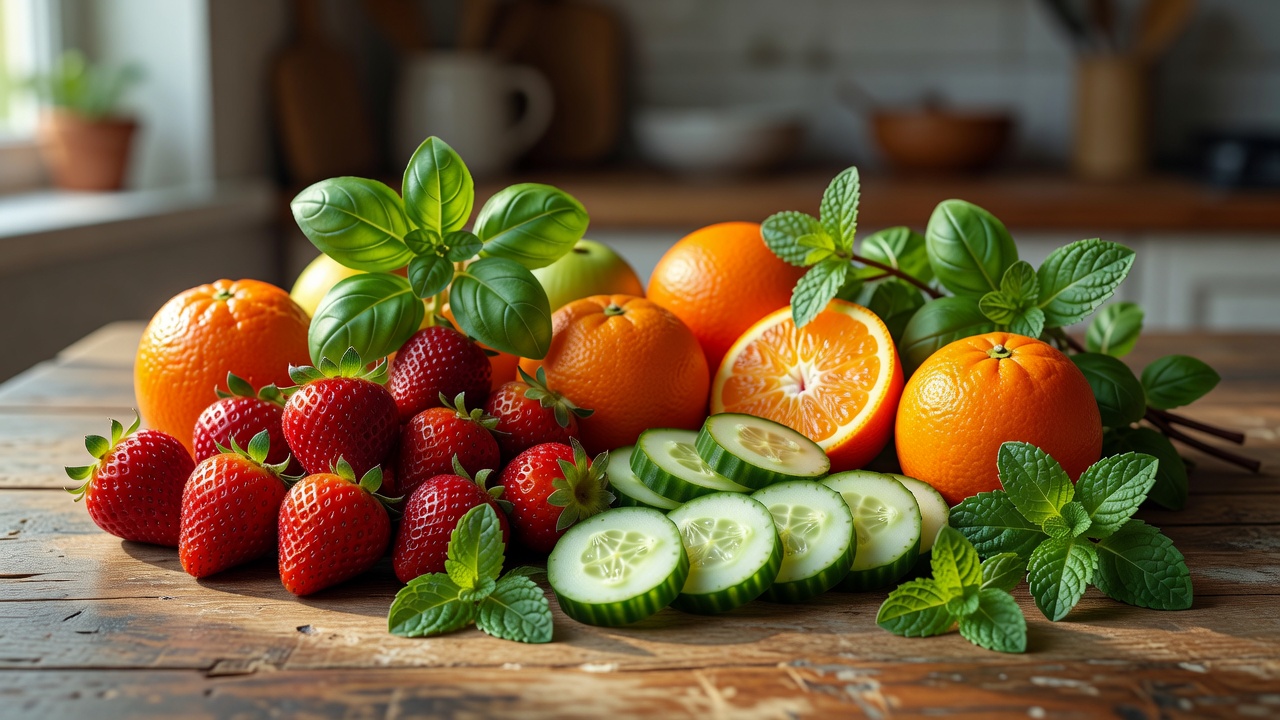
A successful sparkling drink has a clear idea. Perhaps it is juicy peach with a small basil finish, or crisp cucumber with lemon and mint. When every ingredient tries to be the main event, the result can taste busy without tasting especially good. Begin with one flavour you want to recognise immediately, then add a supporting note that makes it brighter, fresher or more rounded.
Pairing is a useful starting point, not a promise that every combination will work in every proportion. Fruit ripeness, herb strength, water mineral content and serving temperature all affect the result. Keep a teaspoon nearby and taste the still base before committing a whole bottle of sparkling water.
A practical flavour-pair matrix
These combinations use familiar kitchen ingredients. Start with the fruit or cucumber as the largest flavour component and add the herb or spice sparingly. The suggested adjustment describes a common issue, not a compulsory extra ingredient.
| Lead | Partner | Character | Try if needed |
|---|---|---|---|
| Strawberry | Basil | Juicy and green | A little lime |
| Peach | Mint | Soft and fresh | A small lemon squeeze |
| Orange | Rosemary | Rounded and aromatic | A shorter herb infusion |
| Cucumber | Mint | Cool and delicate | Lemon for definition |
| Raspberry | Ginger | Tart and warm | A little syrup |
| Pineapple | Lime | Bold and bright | More water if intense |
Balance four things separately
Sweetness gives a drink body and can soften sharpness. It should not be the automatic answer to every problem. A drink that tastes dull may need acidity rather than sugar. Start with a small amount of syrup because adding more is easy; removing it means making a larger batch.
Acidity brings definition. Lemon and lime can make fruit taste clearer, but too much can hide delicate flavours. Add citrus in small measured amounts, particularly with raspberries, tart apples or already-sharp orange juice. Carbonated water also contributes a slight acidic sensation, so a still base should not be pushed to an aggressively sour extreme.
Aroma arrives before the sip. A lightly bruised mint leaf or a thin strip of citrus peel can make a simple drink more expressive. Wash citrus before using the peel, avoid large amounts of bitter white pith and keep garnishes manageable. Stronger aroma does not require a larger pile of ingredients.
Dilution creates drinking space. A fruit base that tastes wonderful by the teaspoon may feel heavy as a full glass. Water separates flavours and makes the drink more refreshing, but too much can erase the lead ingredient. Ice continues the dilution after serving, so taste with the intended ice and water rather than judging only the concentrate.
Try a three-glass taste test
A small comparison teaches more than changing several things in a large jug. Use three small glasses, label them mentally as the baseline, brighter and softer versions, and keep all but one variable the same. You can do this with still water first to avoid wasting bubbles.
- Make a simple strawberry base using mashed, strained berries. Divide 15 ml into each of three glasses.
- Add 45 ml cold still water to every glass. Leave the first unchanged.
- Add a few drops of lime juice to the second. Add a small measured amount of syrup to the third.
- Taste slowly and compare. Which version keeps the strawberry clearest? Use that result to guide a fresh sparkling serving.
Write down what you changed. “More lime” is less useful next time than “added 2 ml lime to one small sample”. A short note about the fruit also helps: very ripe strawberries and pale, firm ones will not behave identically.
When a combination does not work
If a drink tastes medicinal or woody, the herb or spice is probably too strong. Dilute the still base or make a fresh, weaker infusion rather than covering it with sugar. If it tastes muddy, remove one supporting ingredient. Strawberry, basil and lime is easier to tune than strawberry, basil, rosemary, ginger and two citrus juices.
If it seems flat in flavour despite plenty of carbonation, consider acidity and aroma. If it is physically flat, that is a separate problem involving temperature, handling or time. Adding lemon will not put dissolved gas back into a drink. Keep flavour troubleshooting separate from bubble troubleshooting and the fixes become much simpler.
Pair the drink with the occasion
With a substantial lunch, a lighter citrus or cucumber drink can feel refreshing. Beside a not-too-sweet cake, a berry spritzer with a clean tart finish can work well. These are preferences rather than dining rules. Offer water too, keep sweetener optional and tell guests what is in the jug so they can make informed choices about ingredients.
For a mixed group, choose a familiar base and put the adventurous note on the side: a small basil infusion, a mild ginger base or a fresh mint garnish. Guests can explore without everyone having to share one exact preference. The best pairing is still the one people enjoy drinking together.