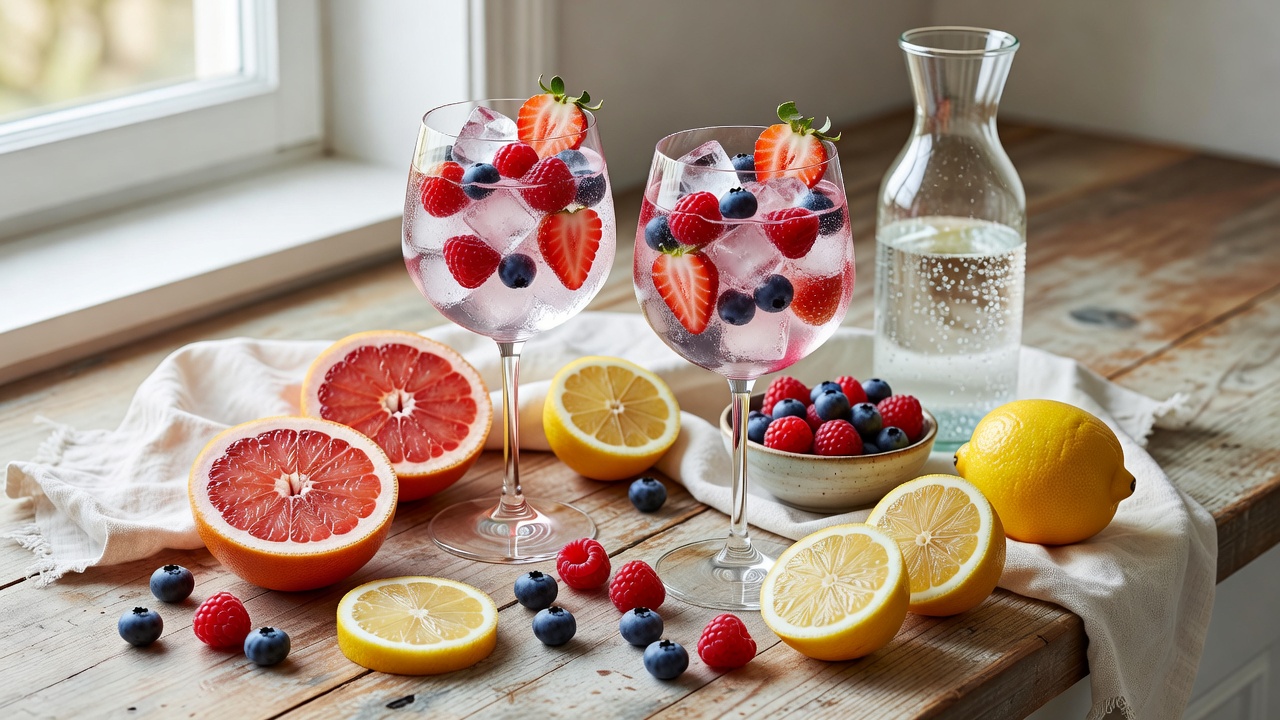
Fruit brings more than colour to a sparkling drink. It contributes aroma, acidity, sweetness and sometimes a little texture. The trick is to notice which of those qualities is already strong before adding anything else. A fragrant strawberry may need only a squeeze of lime; a sharp orange may need a small amount of syrup. Taste a piece of fruit first. That tiny kitchen habit saves a lot of adjustment later.
Our recipes use plain, unsweetened sparkling water. They are mixed in a glass or jug, never inside a water-only carbonator. Choose drinking water you enjoy on its own, and chill it thoroughly. The same recipe can taste surprisingly different with a strongly mineral-flavoured water, so keep the water consistent while you learn what balance you like.
The easy fruit method
For one medium glass, begin with roughly 40–60 ml of fruit juice or strained fruit mash, 10 ml of lemon or lime juice if needed, and 150 ml of chilled sparkling water. These are starting proportions, not a fixed rule. Very tart fruit needs less added citrus, while delicate peach may need less water so its flavour does not disappear.
- Wash the fruit under running water, remove damaged portions and prepare it with clean utensils.
- Mash soft fruit or squeeze citrus. Strain out seeds and thick pulp if you want a smoother drink and less foaming.
- Mix the fruit with any citrus and syrup while the mixture is still. Taste a small spoonful diluted with a little plain water.
- Add ice to the serving glass, pour in the fruit base and finish slowly with cold sparkling water. Give it one gentle lift with a spoon.
Strawberry & lime spritz
Ripe berries make this an inviting first recipe. The lime provides definition rather than taking over. If your strawberries are particularly sweet, begin at the lower end of the syrup range.
- 120 g strawberries, washed and hulled
- 20 ml freshly squeezed lime juice
- 10–20 ml simple syrup
- 300 ml chilled plain sparkling water
- Ice and 2 lime slices
Mash the strawberries with the lime juice and 10 ml syrup, then pass through a sieve if desired. Divide between two ice-filled glasses and top each with 150 ml sparkling water. Stir gently, taste and add a little more syrup only if needed. The finished drink should have an identifiable strawberry centre and a lightly tart finish.
Orange & lemon table spritz
Orange supplies body and sweetness; lemon keeps it lively. This is a useful recipe when you want an easy drink that needs no blender. Squeezing the fruit by hand also makes it easier to avoid grinding bitter pith into the juice.
- 100 ml fresh orange juice, strained
- 15 ml fresh lemon juice
- 0–15 ml simple syrup, to taste
- 300 ml chilled plain sparkling water
- Ice and thin orange slices
Combine the juices and taste before adding syrup. Divide over ice in two glasses, add the sparkling water slowly and finish with an orange slice. If the result seems too assertive, add a little more water rather than automatically adding sugar. If it seems watery, reduce the water slightly in the next glass.
Choose fruit for the result you want
Peach and nectarine give a soft, rounded drink. Mash ripe flesh finely and strain if the texture feels heavy; a little lemon often helps the aroma stand out. Raspberries are brighter and more acidic, so they usually need less citrus than strawberries. Watermelon is already very watery: use strained juice with a smaller sparkling-water addition, and expect a gentle rather than concentrated flavour.
Frozen unsweetened berries are useful outside the growing season. Thaw them in the refrigerator and use their released juice in the base. They do not have to look perfect to taste good. Avoid relying on frozen fruit as the only chilling method, though: a warm base will still lose bubbles quickly when sparkling water is added.
Make sweetness easy to adjust
For a small simple syrup, dissolve 50 g sugar in 50 ml hot water in a clean, heat-safe container. Let it cool before mixing. Refrigerate promptly in a clean covered container, make only what you need and discard it if its appearance or smell changes. This is a fresh kitchen ingredient, not a shelf-stable preserve.
Syrup mixes into cold drinks more evenly than dry sugar. Still, it is optional. Juice already contains sugars, and a drink made with fruit is not automatically low in sugar. Serve extra syrup separately so everyone can choose their own balance.
Set up for company
For six servings, multiply a two-glass recipe by three, but keep the sparkling water unopened until you are ready to serve. Mix the still fruit base earlier the same day and refrigerate it, covered. Store the garnish separately, prepare clean glasses and set out ice at the last moment. Fresh fruit mixtures are perishable; keep them cold rather than leaving a jug on a warm table for hours.
Finish individual glasses for the liveliest bubbles. If a jug is more practical, combine the cold base and sparkling water immediately before pouring, stir gently once and serve promptly. Keep a small still-water version available for guests who prefer less carbonation. A welcoming table makes room for both.