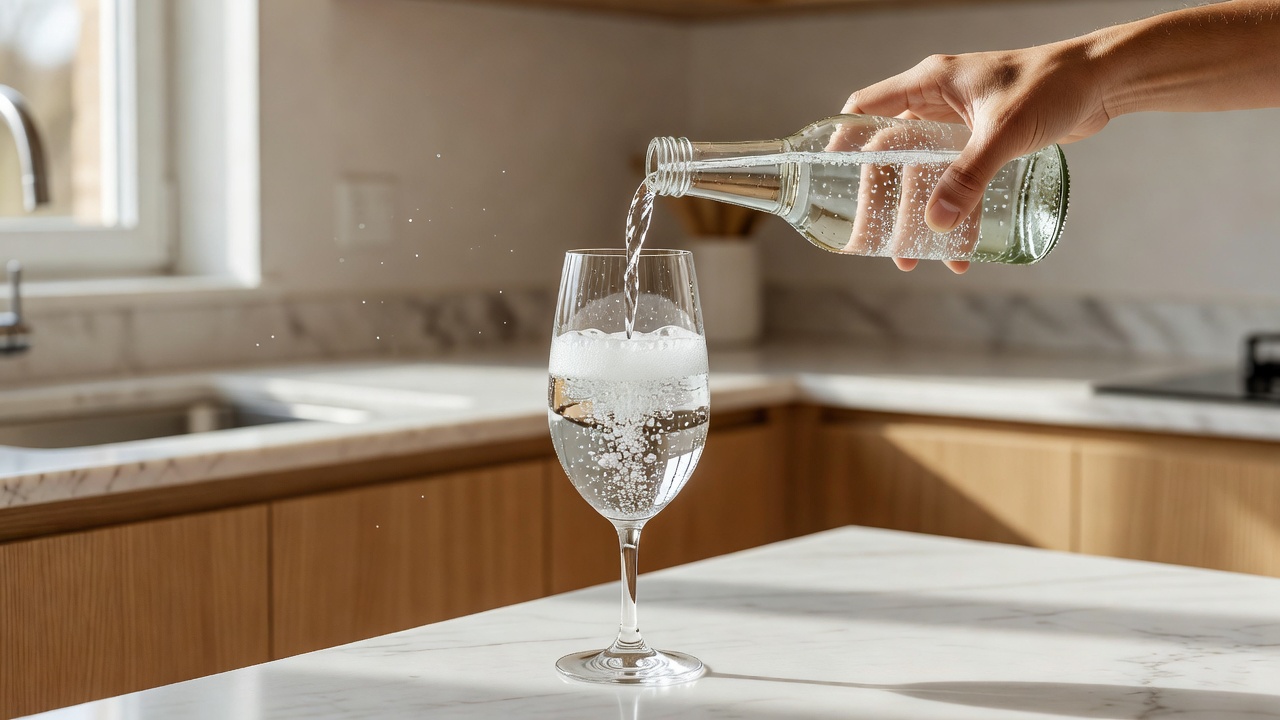
The liveliness in a sparkling drink comes from carbon dioxide dissolved in the liquid. Once the bottle is opened and pressure drops, that gas begins to escape. Cold conditions help keep more of it dissolved, while warmth, agitation and plenty of rough surfaces encourage it to leave. That is why a chilled, gently poured drink usually feels more sparkling than the same recipe assembled with warm juice and enthusiastic stirring.
You can make every recipe on this site with commercially bottled plain sparkling water. A home carbonator is optional. The most useful improvements are often simple ones: refrigerate the fruit base, use cold water and avoid assembling the final drink long before your guests are ready.
Choose your source of sparkle
Plain sparkling water is the most neutral starting point. Sparkling mineral waters vary in mineral content and flavour, which can be pleasant but may change a delicate cucumber or peach drink. Club soda may contain added mineral salts. Read the label rather than assuming every bottle tastes the same.
Tonic water is different: it contains quinine and is usually sweetened or made with sweeteners. It will change both the flavour and the balance of these recipes. It is not a direct replacement when the ingredient list calls for plain sparkling water. Pick the water for the result you want, not just for the bubbles on the label.
Know exactly what your machine allows
Some equipment is explicitly designed for selected other liquids, but that permission is model-specific. It does not transfer to another machine because its shape looks similar. Follow the current instructions for your exact machine, cylinder and bottle, including liquid restrictions, fill lines, cooling requirements and pressure-release procedures. If the instructions are unclear or unavailable, contact the manufacturer rather than experimenting.
Use only compatible pressure-rated bottles approved for the appliance. Inspect them before use and follow any marked replacement or expiry guidance. Do not carbonate in scratched, cracked, distorted or otherwise damaged containers. Ordinary glass jars, decorative bottles and reused drinks bottles are not substitutes for approved carbonation bottles.
Keep cylinders away from heat and handle, store and exchange them according to the supplier’s instructions. Do not modify valves, adapt incompatible fittings or attempt improvised refilling. Never remove a pressurised bottle or force a mechanism that is not releasing normally. Stop using suspect equipment and seek the manufacturer’s advice.
A simple water-first workflow
- Read the instructions and check the machine, compatible bottle and cylinder before starting.
- Fill the approved bottle with plain drinking water to the specified fill line. Use water at a temperature allowed by the manufacturer.
- Carbonate and release pressure exactly as instructed. There is no universal number of button presses that suits every machine.
- Pour the finished sparkling water into a separate glass containing the cold still flavour base. Mix gently and serve.
This keeps sticky ingredients away from water-only equipment and makes recipe adjustment much easier. If the drink needs more sweetness, add syrup to the glass. Do not return a flavoured mixture to a water-only carbonator to try to restore the fizz.
Keep the sparkle in the serving glass
Chill your still ingredients as well as the water. A small amount of warm syrup can raise the temperature of a delicate drink, so let it cool properly first. Use clean glasses and fresh ice. Add sparkling water slowly, allowing space for foam, then give the drink only enough movement to combine it.
Fruit pulp, sugar crystals and crushed herbs can provide sites where bubbles form rapidly. That does not make them forbidden ingredients, but a heavily pulpy mixture may foam more and lose sparkle sooner. Strain the fruit when you want a cleaner finish, dissolve sugar into a syrup beforehand and avoid shaking a completed fizzy drink.
For a group, keep the prepared still base refrigerated and the sparkling water unopened. Finish individual glasses when possible. If you need a jug, use a chilled one, add bubbles shortly before pouring and serve promptly. Repeated stirring and long waits on a sunny table will work against you.
When the drink goes flat
Check temperature first, then timing and handling. Was the water opened long ago? Did warm juice go into the glass? Was the mixture stirred vigorously? Too much still base can also reduce the final concentration of carbonation, even when the sparkling water began lively.
For an individual flat drink, a small addition of freshly opened cold sparkling water may help, though it will also dilute the flavour. Adjust the next serving rather than repeatedly chasing the current one with syrup and citrus. Reseal opened sparkling water promptly in its original suitable container and refrigerate it, following its label guidance.
Leave fermentation out of this method
These guides do not use yeast or uncontrolled fermentation to produce bubbles. Fermentation can create alcohol and build dangerous pressure in sealed containers. A sweet homemade mixture left warm is not a safe shortcut to an alcohol-free soda. For this site’s recipes, use bottled sparkling water or suitable carbonation equipment and keep fresh bases refrigerated.
For equipment-specific guidance, use the official instructions from the relevant manufacturer, such as SodaStream, Aarke or Drinkmate. Their products differ; a brand mention here is not approval of a particular model or method. Mixecrefizzun is independent and is not affiliated with these manufacturers.